
How AI and Social Media Are Changing Real Estate Discovery
KW New Orleans explores how AI, social media, and online expertise are reshaping how buyers find agents and how agents build trust.
1 Big thing
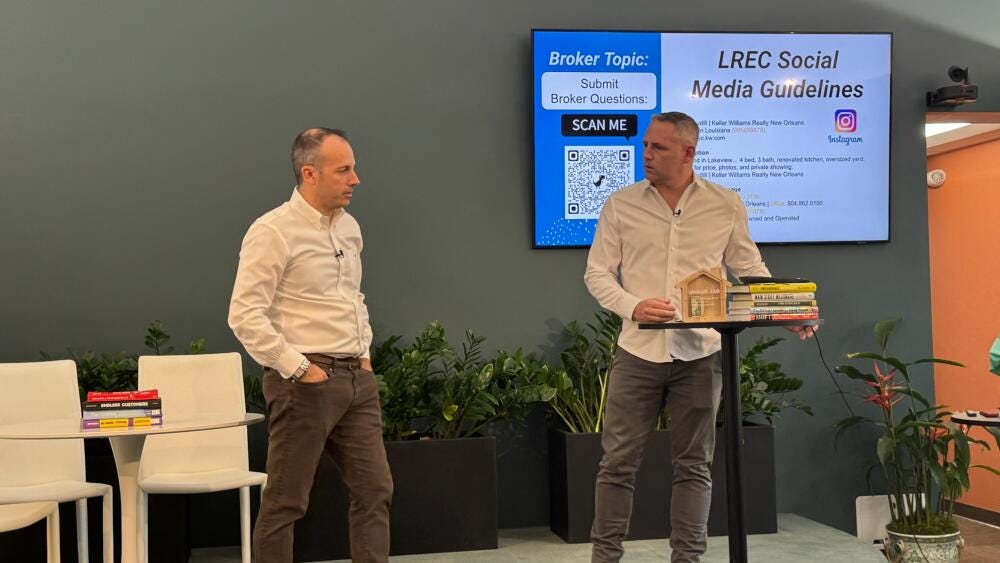
At KW New Orleans, a recent discussion led by Team Leader Cody Caudill and Operating Principal Jeffrey Doussan made something clear: the way buyers and sellers discover real estate professionals is evolving quickly.
The shift is not just about posting more on social media or chasing the latest trend. It is about how the internet itself is changing. Increasingly, search, social platforms, and artificial intelligence are merging into one discovery system where expertise, consistency, and credibility determine who gets surfaced to consumers.
And according to Cody, that shift is already underway.
“All your content eventually is going to be fully transcribed, and there’s going to be a backend to everything,” he said. “The whole internet starts connecting together.”
Why it matters
For years, the real estate industry treated online content as a marketing layer sitting on top of a relationship business.
That framing is starting to break down.
Today’s consumers research neighborhoods on Instagram, watch listing videos on YouTube, ask questions in Google, and increasingly use AI-powered tools to gather information before ever speaking to an agent. Instead of clicking through a traditional website journey, they may simply ask a question and expect an answer.
That changes how expertise is discovered.
Instead of visibility coming only from paid ads, referrals, or search rankings, it may increasingly come from the body of content an agent has published over time—videos, posts, neighborhood insights, answers to common questions.
In other words, the internet is slowly building a map of who knows what.
The big picture
Cody framed the shift through the lens of how technology is evolving.
Right now, people still interact with the internet primarily through searches and text prompts. But that interaction is becoming more conversational. Instead of browsing multiple pages, consumers may simply ask a digital assistant to help them find what they need.
When that happens, the system still needs to decide which professional to recommend.
Why that agent?
Because the digital ecosystem can recognize patterns in expertise.
Cody explained it this way: “Eventually it connects you with an agent. And why are they picking that agent? Because of the expertise of the algorithm.”
That may sound abstract, but the implication is practical. Agents who consistently publish helpful knowledge online are building a digital reputation that machines—and eventually consumers—can recognize.
What they’re saying
Jeffrey Doussan encouraged agents not to obsess over the mechanics behind platforms.
“Don’t try to figure out the algorithm,” he said. “Just be the expert.”
That advice reflects a broader shift happening across digital platforms. Algorithms increasingly reward useful, authentic information rather than formulaic marketing.
In real estate, that could mean answering common buyer questions, explaining neighborhood trends, discussing renovation challenges, or sharing insight into local market behavior.
The goal is not perfection. The goal is credibility.
Between the lines
Another key takeaway from the discussion is that influence online does not require massive audiences.
Many agents assume social media success requires hundreds of thousands of followers. In reality, a much smaller but engaged audience can be powerful if it reflects the right market and relationships.
The panel emphasized that direct messages, conversations, and engagement can scale communication with a network of people far beyond what traditional marketing once allowed.
That idea reframes social media from being a lead-generation tool to something closer to a communication infrastructure.
Instead of simply producing leads, it helps agents stay top-of-mind with the people already connected to them.
The compliance side agents can’t ignore
While the conversation explored the future of digital discovery, Cody also reminded agents that certain legal requirements still apply to everything they publish.
In Louisiana, the Louisiana Real Estate Commission (LREC) requires agents to clearly identify themselves as licensed professionals associated with a brokerage.
Because social platforms often limit space—Instagram bios, for example, allow only 150 characters—agents may not always be able to display every required disclosure directly in a profile.
That is where the “one click away” rule comes in.
Agents must ensure that essential information—such as brokerage affiliation and required disclosures—is accessible within one click of their profile, typically through a website link or landing page.
Cody explained that regulators care primarily about clear supervision and brokerage identification, ensuring the public can easily determine who an agent works for and how they are licensed.
Why digital identity matters
The discussion also touched on something larger happening beneath the surface of the internet.
As AI systems increasingly scan and connect information across platforms, digital identity becomes more important.
A consistent professional footprint—names, profiles, business pages, and licensing information—helps platforms understand that multiple accounts belong to the same professional.
That clarity allows systems to connect websites, social profiles, and listings together, creating a clearer picture of who the agent is and what expertise they represent.
In other words, the internet is learning to recognize professionals the same way people do.
What this means for agents right now
The takeaway from the KW New Orleans discussion was not that agents need to become tech experts overnight.
Instead, the message was simpler: show up consistently, share real knowledge, and maintain a clear professional presence online.
The tools will keep evolving.
Platforms will change.
AI systems will get smarter.
But the professionals who consistently demonstrate expertise will remain easier to discover in whatever environment comes next.
Bottom line
Real estate has always been a relationship business, and that is not changing in New Orleans.
What is changing is how those relationships begin.
More and more often, the first introduction happens online—through a video, a post, a conversation thread, or an answer to a question someone typed into a search bar.
The agents who treat those moments as opportunities to share real knowledge are building something larger than a marketing presence.
They are building a digital reputation.
And in the next phase of the internet, that reputation may matter more than ever.
Disclaimer: This article is for informational purposes only and reflects commentary shared during a KW New Orleans discussion about technology, social media, and regulatory considerations. Real estate laws, regulations, and platform policies may change over time. Nothing in this article should be considered legal advice. Agents and consumers should consult appropriate licensed professionals regarding specific legal or compliance questions.
This article was originally published on our website, which can be accessed here.