
Glass Half Full: How Recycling Builds Real Estate Resilience
Glass Half Full turns recycled glass into sand for coastal restoration, strengthening New Orleans communities, resilience, and real estate leadership.
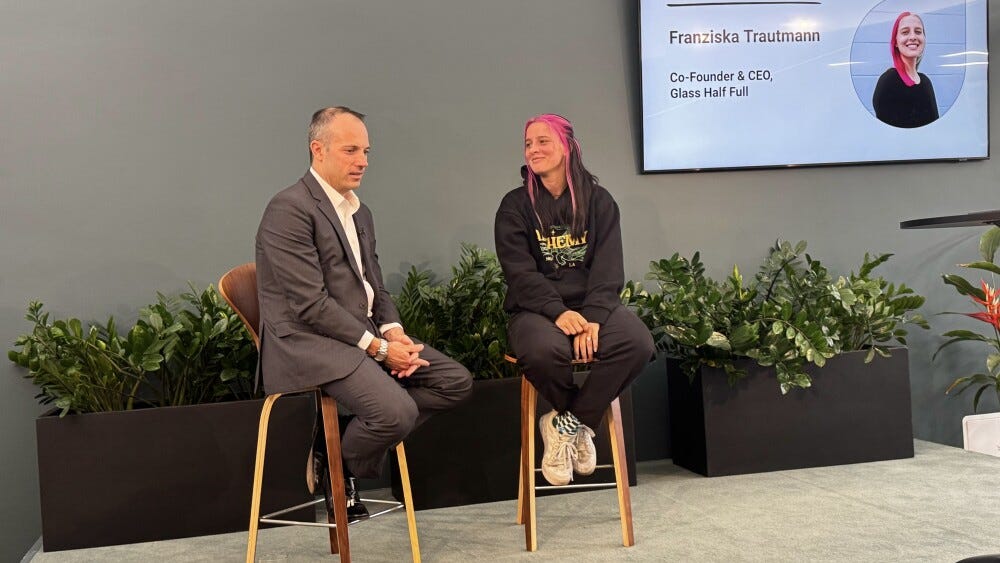
NEW ORLEANS — What if something as simple as recycling your wine and beer bottles could help protect your home, your neighborhood, and our region’s future? That’s the story behind Glass Half Full — a New Orleans–based company that transforms post-consumer glass into sand and gravel used to rebuild eroding coastlines.
This week at KW New Orleans, we sat down with co-founder and CEO Franziska Trautmann, whose visionary work connects community action to long-term regional protection — and offers real estate professionals new ways to lead conversations about resilience with clients.
Why this matters — to New Orleans and to agents
Louisiana has lost hundreds of square miles of coastal land over the last century, increasing storm surge risk and pressure on homes and insurance markets. Wetlands aren’t just ecosystems; they’re protective infrastructure.
Glass Half Full’s model uniquely addresses that:
They collect glass waste through free drop-off hubs, residential pickups, event services, and commercial routes.
The glass is sorted, crushed, and re-purposed as fine sand or gravel.
That sand goes into coastal restoration projects designed to slow land loss and absorb storm energy.
They also produce cullet — recycled glass for new bottle production — keeping material in the local economy.
For agents, this isn’t just an environmental story — it’s a community resilience narrative homeowners are increasingly asking about, from insurance premiums to climate risk disclosures.
From backyard idea to regional force
Glass Half Full began in 2020 as a backyard project between Franziska and co-founder Max Steitz when they realized New Orleans lacked any glass recycling system — meaning most bottles ended up in landfills.
“When my co-founder Max and I had this idea to combine those two issues with one solution, it just felt right,” Franziska said. “Every day we get to work towards something bigger than us — a huge waste issue, a huge coastal erosion crisis.”Today, Glass Half Full operates a 10,000-square-foot facility in Chalmette capable of processing hundreds of thousands of pounds of glass per day.
It’s not just recycling — it’s local economic infrastructure:
Jobs in the Gulf South
Commercial pickups reducing waste hauling costs for businesses
New industrial applications for recycled material
That’s the kind of story that resonates with clients who care about community — not just transactions.
What this means for your clients (and your business)
Agents can use this partnership as creative content and community value messaging:
Highlight local solutions when clients ask about environmental risk
Host events that tie community impact to your brand
Create social content that’s unique, local, and purpose-driven
“It’s not a one-and-done thing. Today’s day one.” This was Franziska’s rallying call during our conversation — and it echoes the mindset agents should bring to long-term client relationships.Community events, volunteer opportunities, and public education around coastal restoration give agents authentic touchpoints beyond marketing slogans.
Mardi Gras, bottles, and better coasts
Glass Half Full even partnered with local Mardi Gras recycling efforts — placing recycling bins along parade routes and encouraging folks to bring beads, bottles, and cans to reuse or repurpose.
This uniquely New Orleans initiative shows that sustainability doesn’t have to compromise culture — it can enhance it.
A resilient future starts with local action
This isn’t just recycling — it’s regional risk management. Every bottle diverted from a landfill becomes part of sand used for protecting shorelines and building resilience into communities where we live and work.
“The coastal restoration piece for me is definitely the thing I am most proud of,” Franziska shared in a recent interview — citing rising wetlands where before there was open water. For New Orleans real estate professionals, that’s a story worth telling — one that connects everyday behavior to long-term community and property security.
Bottom line
Glass Half Full proves that local innovation can meet big challenges — transforming waste into protection for homes, neighborhoods, and livelihoods.
At KW New Orleans, we’re proud to be the place where leaders talk about real estate in the context of real problems and real solutions. Because selling homes isn’t just about square footage — it’s about building a stronger, more resilient community.
Disclaimer: The information in this article is provided for general informational purposes only and does not constitute legal, environmental, insurance, or financial advice. Consult a licensed real estate broker, insurance professional, environmental specialist, or attorney for guidance specific to your situation.
This article was originally published on our website, which can be accessed here.