
Back to Work: Database Strategy & NOLA Market Shift
Why your top 200 contacts matter more than ever — plus real data on the New Orleans housing market and multifamily trends.
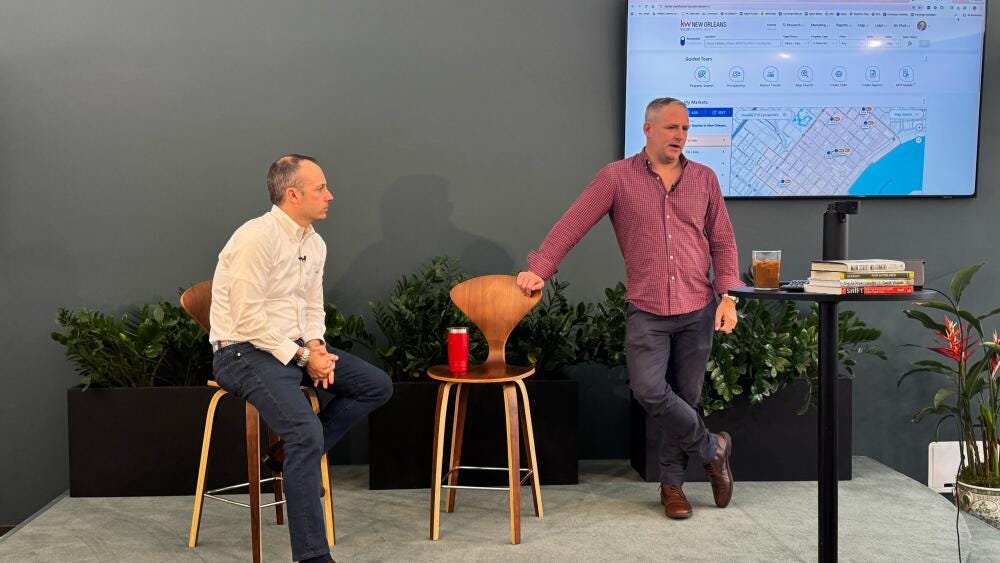
In this market, real work starts with two things:
Your database.
Your understanding of what’s actually happening in New Orleans.
Let’s start where it matters most.
Your Database Is Not a Trophy Case
For years, the industry told us bigger was better: Bigger database, more Facebook leads, more emails, more contacts. Divide your database by 12 and that’s how many deals you’ll get, right?
Except that’s not what happened.
What happened is we built bloated databases full of people who downloaded something once, filled out a form once, or gave us an email address once — and never engaged again. Now we’re staring at 4,000… 9,000… 15,000 names, and we’re not in relationship with 90% of them, so the question isn’t “How big is your database?”
The question is: Who is your Top 200?
Research inside Keller Williams has long pointed to the “201+” concept. A mature, healthy real estate business generates roughly 65% of its deals from repeat and referral business. When you actually run the math in our market, 200 true relationships can support well over $100,000 in GCI — often much more.
If 200 people move once every 10 years, that’s 20 transactions. At roughly $10,000 per side, that’s $200,000 in potential GCI. Even capturing 80% of that is a real business.
But that only works if you know who they are. So the first assignment was simple: Tag your top 200.
Not guess, not assume. Actually go through your past clients, your sphere, your referral partners, and label them.
Because once you see the list, one of two things will happen:
You’ll realize you have a powerful foundation.
Or you’ll realize you don’t — and that awareness might change your entire year.
Either way, clarity creates control.
The Old Model of “36 Touches” Is Evolving
We used to teach four quarterly calls, we used to count touches to 36, we used to rely heavily on email campaigns.
But consumer behavior has shifted. Some people want calls, some prefer texts, some live on Instagram, some respond only when you comment on their posts consistently. The takeaway wasn’t “calls are dead” or “email doesn’t work.”
What works is consistent action. What doesn’t work is doing nothing.
If you identify 200 people and communicate with 5 of them per day, you’ll cycle through that group every quarter. That’s manageable. That’s disciplined. That’s doable.
The key isn’t the channel. It’s the system, and it has to be authentic. Consumers can smell a “care call” that’s really a sales call. The better positioning — and frankly the more honest one — is that you are a professional advisor around one of the largest financial assets in their life. That’s not pushy, that’s responsible.
What’s Actually Happening in the Market
We also spent time looking at the data — not headlines, not opinions. And here’s what stood out:
1. Demand Is Returning
January was strong. Transactions were up significantly year-over-year in Orleans Parish. Months of supply has been trending down. Buyer activity is stabilizing in a healthier way.
The narrative that “everything is collapsing” simply isn’t supported by the data. Average sales prices continue to show steady appreciation — not dramatic spikes, not crashes. Just normal market behavior.
2. Multifamily Is a Different Story
Multifamily properties are currently firmly in a buyer’s market. Rents surged over the last few years. Investors bought aggressively when rates were low. Universities added significant on-campus housing inventory. Regulatory pressure increased. Now the pendulum is swinging.
Older owners are listing properties based on 2021 expectations — and many are sitting. Some are overpriced. Many have deferred maintenance. And in some cases, the numbers simply don’t pencil anymore, which creates opportunity.
But it also raises a bigger conversation about neighborhood composition. If too much multifamily inventory disappears because it no longer works financially, we risk losing the mixed-use fabric that makes New Orleans neighborhoods healthy and vibrant.
Markets are cyclical. The key is recognizing where the cycle is — not reacting emotionally to it.
The Transparency Era: Marketing in 2026
Another major theme: authenticity. We’ve reached a point where photos are almost too good. AI staging. Perfect lighting. Enhanced skies. It’s impressive — until buyers walk in and feel misled.
Consumers are increasingly frustrated when reality doesn’t match marketing. That’s why video — especially authentic walkthrough video — matters more than ever. Not corporate music, not over-produced slideshows, not sterile narration. Real walkthroughs. Real voice. Real perspective.
When agents in the room started doing simple, authentic video tours, something surprising happened: people recognized them in public and mentioned the videos. Not because they were perfect — but because they were real.
YouTube now transcribes everything automatically. That means your walkthroughs become searchable in Google. Say the address. Say the neighborhood. Say your name. That audio becomes data.
This is not about becoming an influencer. It’s about increasing trust. And in a market where showings matter — and listings are taking longer to sell — trust drives action.
Off-Market Hype vs. Market Discovery
We also addressed the growing noise around “exclusive” or “private” listings.
Here’s the reality:
Price discovery happens in open markets. When exposure shrinks, competition shrinks. When competition shrinks, sellers may lose leverage. Private networks can have strategic uses — especially in luxury — but broad exposure remains one of the reasons U.S. real estate markets appreciate consistently over time.
The system works when transparency exists and our responsibility is to protect consumer interests — not chase trends that primarily benefit brokerage margins.
The Real Reset
At the end of the meeting, the message wasn’t complicated.
Tag your top 200, commit to consistent communication, understand the data, adapt your marketing to match consumer behavior, and stop waiting for deals to “fall from the sky.”
Because the agents who pause now, audit their systems, and act intentionally over the next 90 days will look very different by December. It’s a new season- Let’s get back to work.
Disclamer: The information in this article is provided for general informational purposes only and does not constitute legal, financial, investment, or real estate advice. Market statistics are subject to change and may vary by property type and neighborhood. Consult a licensed real estate broker, financial advisor, or attorney for guidance specific to your situation.
This article was originally published on our website, which can be accessed here.