
Antonio Carbone on the Economy, Rates, and Why Real Estate Is Feeling It First

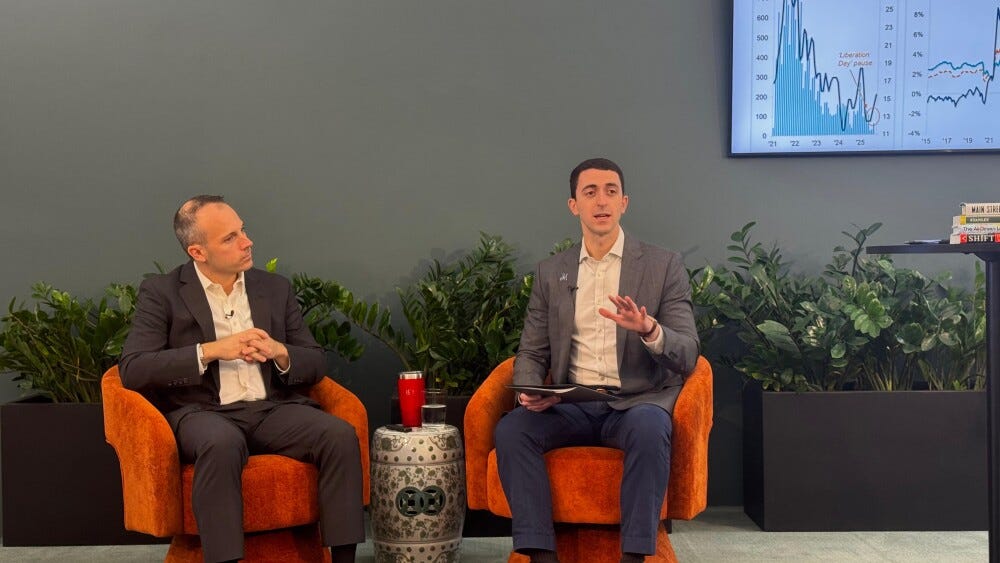
Driving the conversation
In an economy dominated by fast-moving headlines and emotional reactions, KW New Orleans welcomed back Antonio Carbone, Banker at J.P. Morgan Private Bank, to do something increasingly rare: slow things down and explain what the data is actually saying.
Antonio works with some of the largest portfolios in the country. His perspective matters not because it predicts the future, but because it connects policy, markets, and real-world behavior — exactly what real estate professionals need to help clients make confident decisions.
“Look at the data. Look at what’s actually happening.”
The big picture
Antonio framed the current moment as unusual, but not chaotic.
The U.S. economy is navigating three realities at the same time:
Inflation is lower, but not defeated
Employment is softening, but not collapsing
Interest rates are likely near a plateau, not a cliff
That combination explains why the last few years have felt so uncomfortable — and why the next phase will be more about adjustment than shock.
“You guys have been the canary in the coal mine — and you usually are.”Real estate, Antonio explained, tends to feel tightening first and relief first. Housing reacts quickly to changes in rates, credit availability, and consumer confidence, long before those effects show up clearly in other industries.
Inflation, employment, and the Fed
Antonio walked through how the Federal Reserve is balancing its dual mandate: inflation and employment.
Key points:
Inflation has cooled into the 2.5–3% range, higher than the Fed’s target but far from crisis levels
Unemployment has risen modestly, not sharply — a sign of slowing, not breaking
Payroll growth has cooled, but layoffs remain limited
This is why rate cuts have been measured, not aggressive.
“We’re landing this plane very carefully.”For real estate agents, this matters because it resets expectations. The era of emergency policy is over. The next phase is about normalization, not rescue.
Rates: what’s likely — and what isn’t
Antonio was direct about mortgage rates: dramatic relief is unlikely.
Instead:
The 10-year Treasury appears relatively anchored
Mortgage spreads have narrowed, signaling greater market confidence
Most of the expected rate cuts are already priced in
That means buyers and sellers waiting for a “perfect moment” may be waiting a long time.
The more productive conversation is about time horizons, not headlines:
How long does a buyer realistically plan to stay in a home?
How does payment structure matter more than rate alone?
What flexibility exists over the next 5–10 years?
In New Orleans especially, where homeowners often stay longer than the national average, this framing matters.
Capital on the sidelines — and why it won’t stay there
One of Antonio’s most practical insights focused on cash.
“Cash is not your friend.”As short-term yields fall, holding large amounts of cash becomes less attractive. Historically, that shift pushes capital toward assets that:
Produce income
Hedge inflation
Offer long-term utility
Real estate fits all three — which is why investors continue to circle the space even after a difficult cycle.
Antonio noted that when economic conditions deteriorate severely, housing distress usually appears late, not early — and current data does not point in that direction.
AI: a major force, but not the whole story
AI investment was discussed as an important driver, not a standalone explanation.
Antonio emphasized that:
AI has triggered historic levels of capital spending
Much of that spending is physical: power, infrastructure, land, labor
The build-out will take years, not quarters
“This isn’t a one-year thing.”For real estate professionals, the relevance isn’t predicting winners — it’s understanding how large-scale capital investment reshapes employment patterns, regional growth, and long-term housing demand.
What this means for real estate professionals
The strongest takeaway from the conversation wasn’t about markets — it was about role.
In moments like this, clients don’t need cheerleaders or alarmists. They need professionals who can:
Translate economic data into practical guidance
Explain risk without amplifying fear
Help people make decisions aligned with their lives, not the news cycle
That’s where real estate agents earn trust.
The bottom line
Antonio Carbone brought clarity to a moment defined by noise.
The economy is slowing, not breaking. Rates are stabilizing, not collapsing. Capital is cautious, but not frozen. And real estate — as usual — is feeling the changes first.
At KW New Orleans, we believe these conversations matter because leadership in real estate starts with understanding the bigger picture.
That’s how professionals help clients navigate uncertainty — and how cities like New Orleans move forward.
Disclaimer: This article is for general informational purposes only and does not constitute legal, financial, investment, or real estate advice. Economic conditions, interest rates, and market dynamics are subject to change. Readers should consult licensed professionals for guidance specific to their individual circumstances.
Watch the full interview:
This article was originally published on our website, which can be accessed here.